A renewal nobody noticed
Insurance, certificates and inspections fall due on different dates, in different inboxes. One missed date can leave the block uninsured, or a flat sale stuck.
One place for the duties, the money and the paperwork. rNest reads what arrives, gets the next step ready, and changes nothing until a director approves it.
Free while in private testing · No sign-up for the demo · Your data kept in the UK
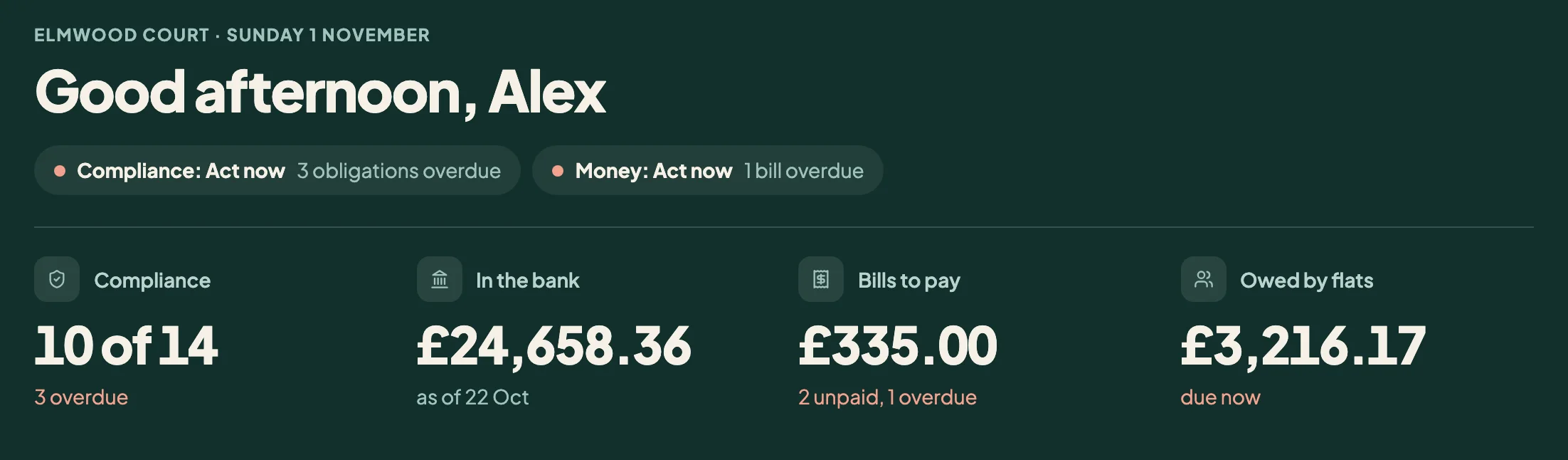
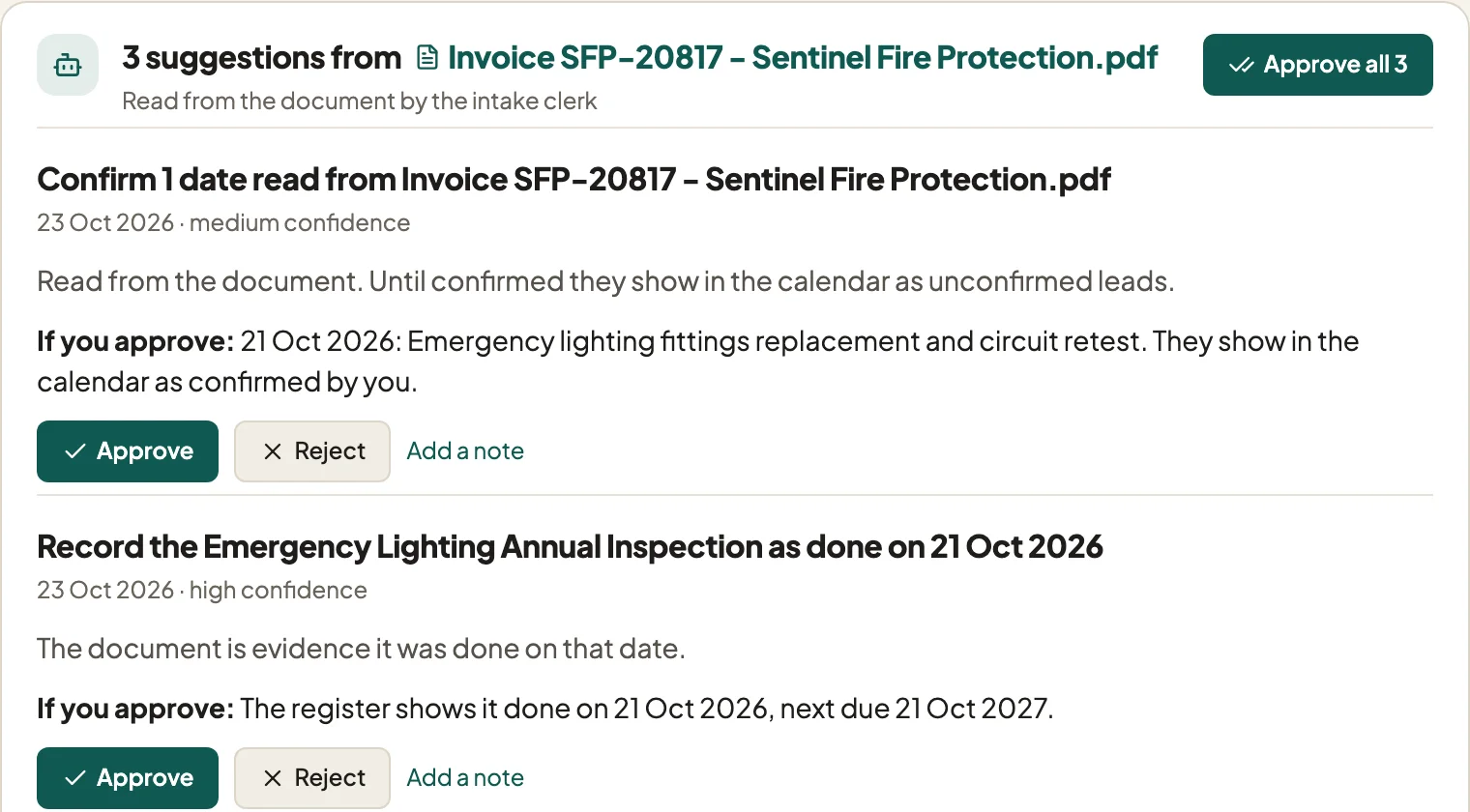
Elmwood Court is a block we invented, so we could show you the real app without showing anyone’s home.
Why it matters
When residents run the management company, the duties do not get any smaller. Three ways it goes wrong:
Insurance, certificates and inspections fall due on different dates, in different inboxes. One missed date can leave the block uninsured, or a flat sale stuck.
A service charge cost not demanded within 18 months may never be paid. Late year-end accounts are how most blocks find out.
Fire safety and health and safety duties sit with the company, and a director can be prosecuted for the company’s neglect.
How it works
Four assistants do the work a managing agent’s office would, and put each result in one place for a director to approve.
Certificates, insurance, leases, invoices, bank statements: whatever you have, in whatever state the last agent left it.
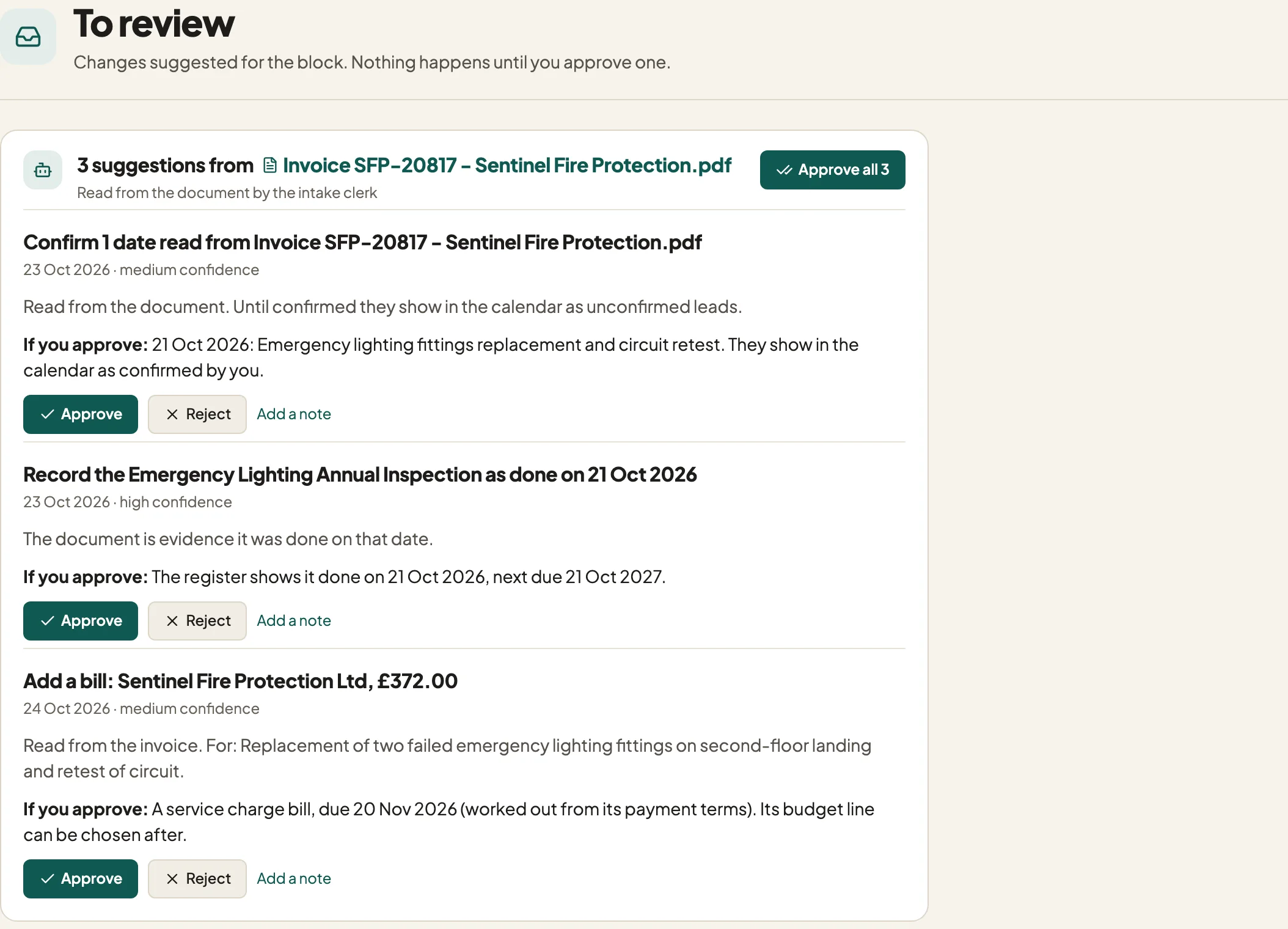
The intake clerk reads each document, the bank clerk matches each payment, and each week the compliance watch works out what is due and drafts the email to the contractor.
Nothing changes until a director approves it. Approve in a click, and the register and the accounts follow, with the record kept.
The product
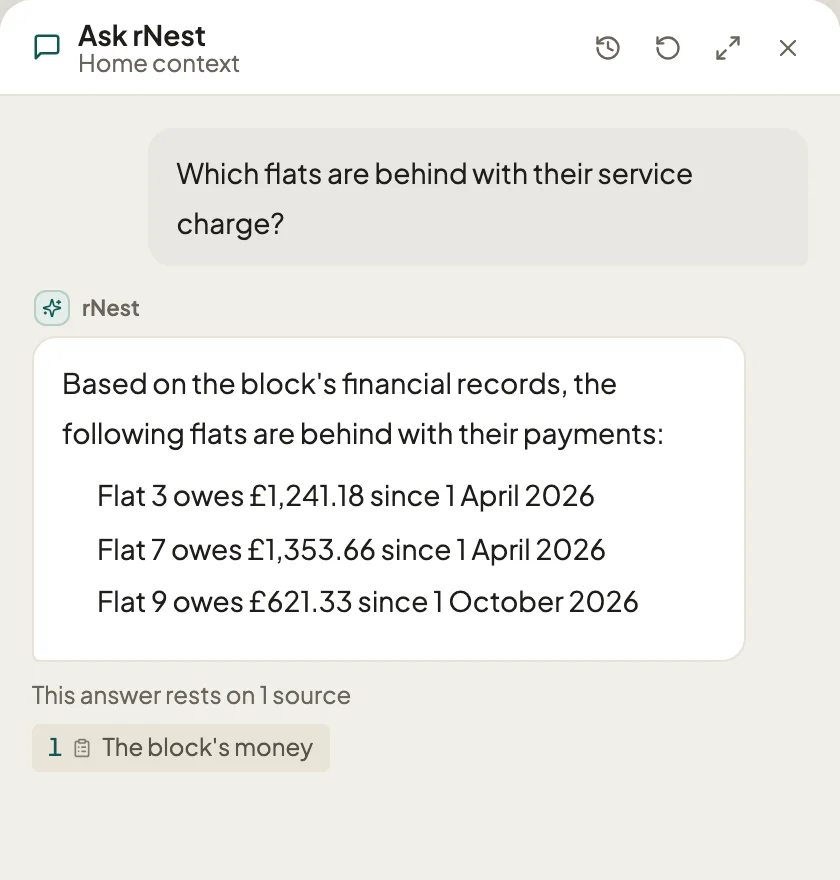
The real app, not mock-ups. Open any part of it in the demo and click around; nothing is saved.
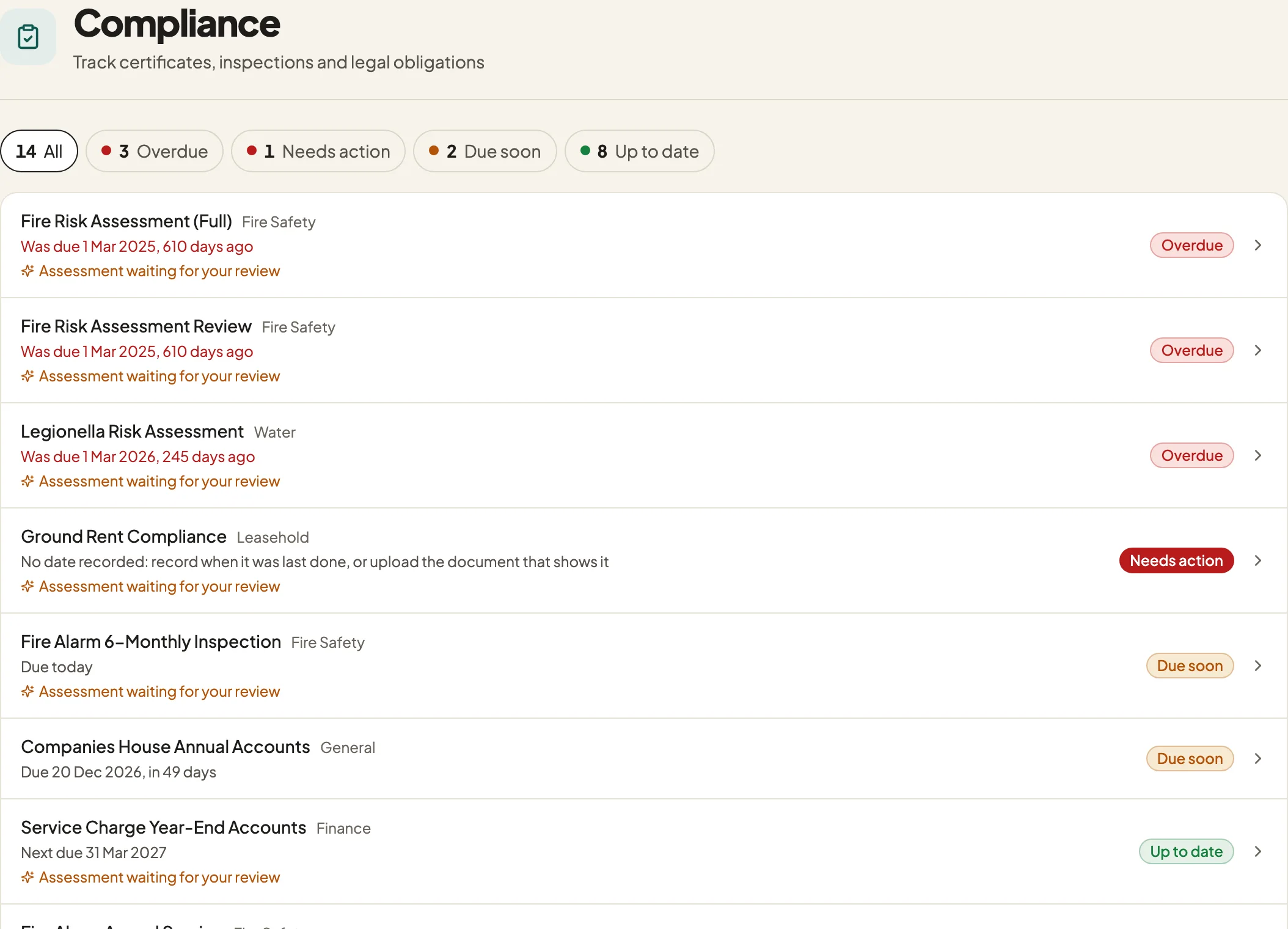
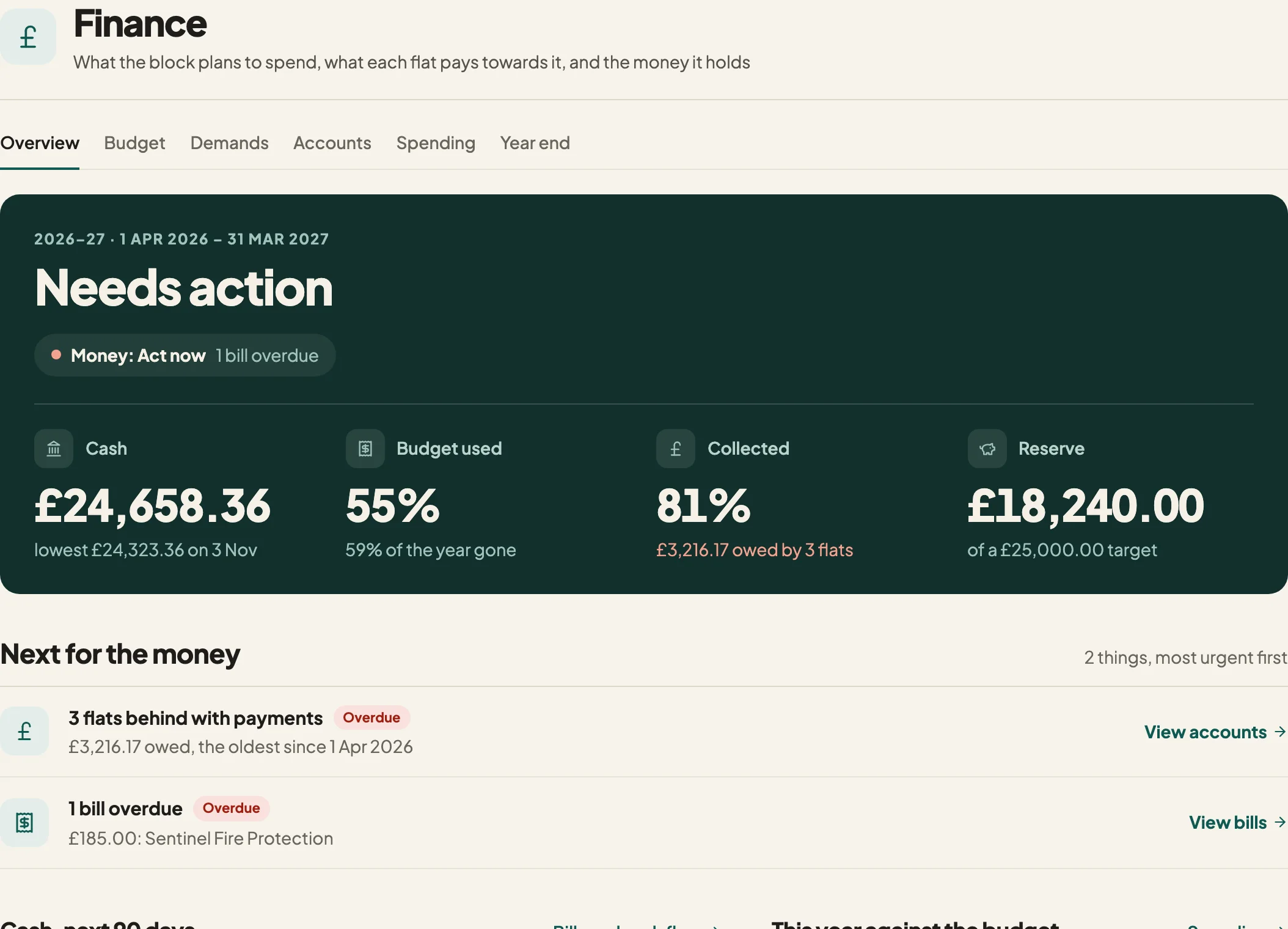
Which ones apply depends on how the building is built and who owns it — not on how big your budget is. rNest works that out from your documents.
Victorian conversion
Four flats, a shared stair and a freehold the leaseholders bought in 2003. No managing agent, and a fire risk assessment nobody is sure is current.
Purpose-built block
Thirty flats over five storeys, an RMC run by three residents, and a communal supply that brings electrical and legionella duties with it.
New-build tower
Above eighteen metres, so the Building Safety Act applies: an accountable person, a safety case, and a registration that has a deadline.
Illustrations. No building shown is a customer’s.

Why it exists
I became a resident director of my block in 2025. The handover from the previous manager was hard to piece together, and the leaseholders not involved in running the building had little way to see what had been done, or why.
I built rNest to fix both: to keep the block on the right side of the law, and to make how it is run visible to every leaseholder, not only the directors.
I want it to take the stress out of running a block, with the modern tools that should have been there all along. If you run your own block, I would like to hear what is on your plate.
Aidan Lillystone
Founder · resident director, London
Security and control
Software that reads your building’s documents and its bank is only worth having if you can check it.
rNest helps you keep track of your obligations and your accounts. It is not a substitute for professional advice, and it says when it is answering from general knowledge rather than from your records. Read the privacy notice
Nothing read from a document or the bank changes your records until a director approves it.
Who suggested each change, who approved it and when: the history a leaseholder or a buyer’s solicitor may ask for.
Stored in London on AWS and encrypted. AI processing runs on AWS Bedrock within the EU.
Your leases and certificates are not used to train any model.
Questions
Nothing while it is in private testing. When it opens it will be priced per block, and every block in testing will be told the price well before anything is charged.
Resident directors of residents’ management companies (RMCs) and right to manage (RTM) companies, and freeholders who look after their own block of flats, from a four-flat conversion to a tower.
It does the record-keeping and paperwork an agent’s office would: the compliance register, the budget, service charge demands, each flat’s account, matching the bank and reading invoices. You still choose and instruct contractors, and you can use it alongside an agent if you have one.
No. It keeps track of your obligations and accounts, cites the document, record or section of an Act behind every answer, and says when it is answering from general knowledge. For a decision that matters, take professional advice.
No. What it reads from a document or the bank arrives as a suggestion, and nothing changes in your records until a director approves it. Every change is kept on the record: who suggested it, who approved it, and when.
Your documents are stored in London on AWS, encrypted at rest and in transit, and AI processing runs on AWS Bedrock within the EU. Nothing you upload is used to train any AI model.
The law of England and Wales: the Landlord and Tenant Acts 1985 and 1987, the Commonhold and Leasehold Reform Act 2002, the Regulatory Reform (Fire Safety) Order 2005, the Building Safety Act 2022 and the rest. Scotland and Northern Ireland are not covered yet.
They are yours, and we will send you a copy. Uploaded documents and everything read from them are deleted within 90 days of leaving; the record of compliance assessments is kept for six years, as the privacy notice explains.
Look around the live demo, which needs no sign-up, then ask for early access. We set up each block with its directors, from the documents you already have.
The demo is the whole app on an invented block, and needs no sign-up. We are taking on a small number of blocks at a time, setting each one up with its directors.


